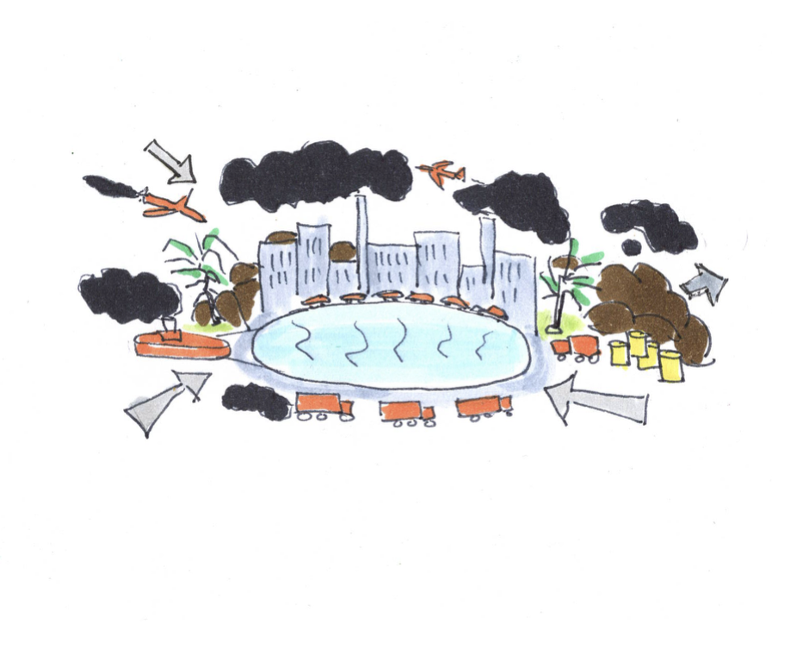
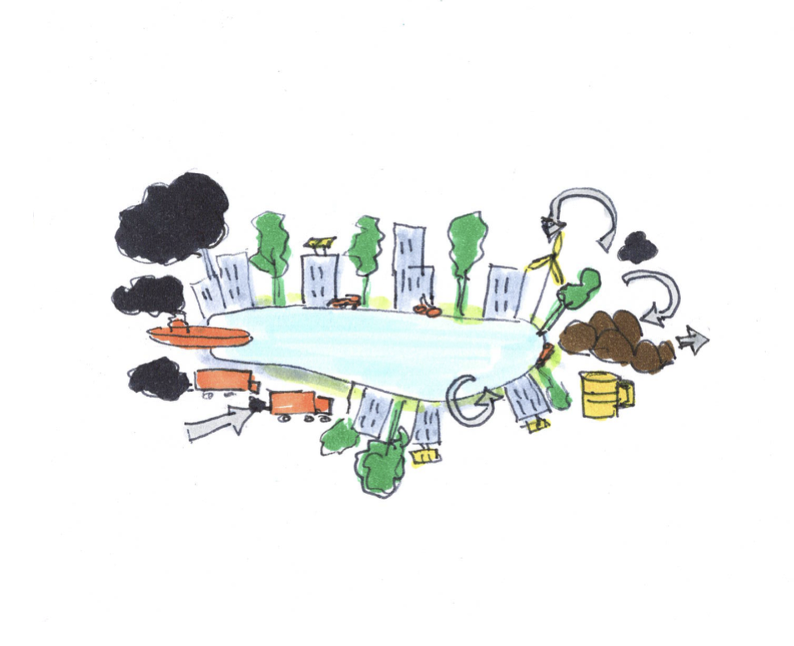
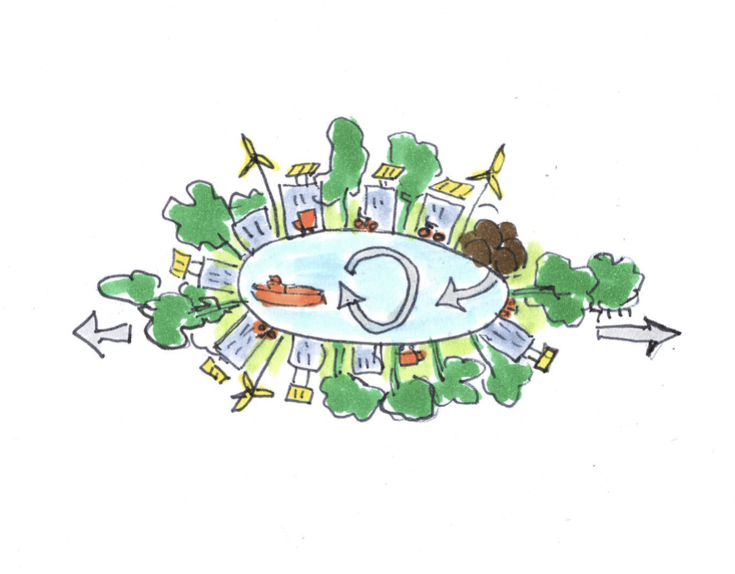
The great challenges of our time require more than limiting damage. They require active restoration — of ecosystems, of communities, of the balance between people and nature. Not waiting for the perfect solution, but taking the best step possible now. That is regeneration.
Our current way of life has an irreversible impact on the world. This degenerative system — extractive, linear, based on scarcity and depletion of natural resources — is unsustainable.
Fortunately, we are collectively becoming more aware of this, and sustainability thinking has taken off over the past decades. Sustainability is a necessary, but ultimately imperfect position. Limiting damage and maintaining the status quo is not enough.
The next step is regeneration: actively restoring natural and social ecosystems. A systemic view of the world based on abundance, reciprocity and resilience, where the goal is to give back more than you take.
Regeneration is not an abstract promise. It is the direction you choose with every project, every intervention, every decision — whether it concerns a city, a business or a product.
Protopia works in the tension between regenerative vision and economic reality, and makes that tension productive.
Not by advising from the sidelines, but by designing, building and realising.
Protopia Studio has developed eight regenerative design principles. They describe not an end state, but a direction — of more life, more abundance, and more capacity for systems to renew themselves. These principles are both a design attitude and an assessment tool: for cities, for organisations, for products.
Regenerative theory only gains power when it is rooted in practice. That is why we actively build a knowledge base of regenerative initiatives and approaches worldwide. That database forms the backbone of our work — so that for every challenge we can draw on what already works, and translate it to the context of our clients. See also our exploratory research Amsterdam Regenerative City.