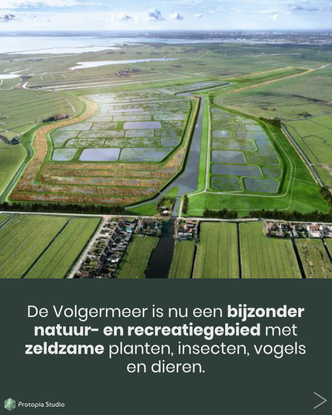
Just north of Amsterdam lies a patch of Dutch countryside that shouldn’t be countryside at all. The Volgermeerpolder. Beneath the grass and reeds, chemical waste still lies buried. And yet you can walk through it today.
Behind the fence
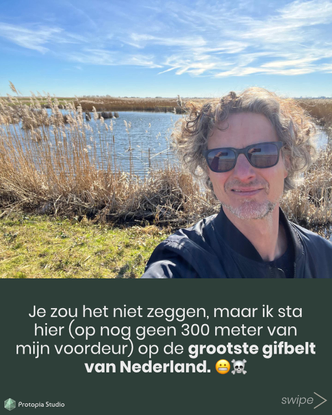
I grew up in Broek in Waterland, the village that borders the Volgermeerpolder. Since 2019 I have been living there again with my family.
In my childhood, an impenetrable green lay behind a tall fence. A place you didn’t go to, but heard about. Village stories circulated about frogs with two heads and the strangest plants. It captured my imagination and ignited my first fascination with nature.
One of the most heavily polluted toxic dumps in the Netherlands
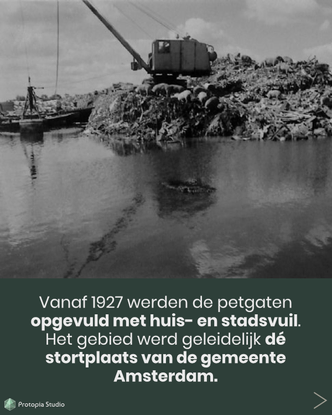
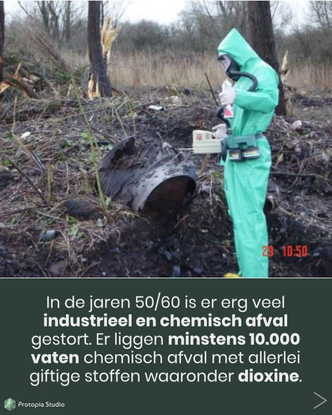
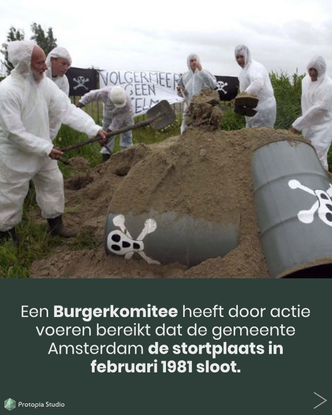
What I didn’t know then: from the 1950s to the 1970s, this was one of the most heavily polluted toxic dumps in the country. Industrial chemical waste was dumped here for years. When that came to an end in 1981, the area wasn’t immediately cleaned up. Nature was given space. Behind that fence, it did what it does — at its own pace, with its own logic.
A landscape with an underground legacy
Today there is a beautiful patch of Dutch countryside here. With the dumped poison still underneath.
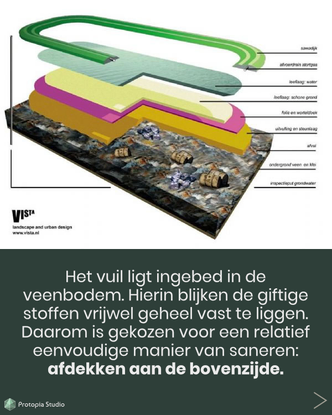
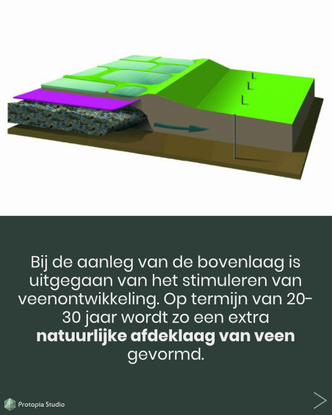
How is that possible? By carefully encapsulating the waste. First with technical, non-natural materials as a sealing layer. On top of that, a plant mix that, when it dies off, will itself form the new natural cover layer. Layer upon layer, year after year. Like the peat that has rested here for centuries.
A living lid, made of plants and time.
Not cleaning up, but co-building with nature
The Volgermeerpolder shows what regenerative design can look like in practice. The choice not to remove everything, but to embrace and encapsulate. The choice not to control nature, but to let it work as a partner. And the recognition that some problems cannot be solved within a single generation.
Not cleaning up, but working with time and ecology.
We believe there is something to be learned here for how we shape our cities and landscapes. We have a legacy of contaminated soils and depleted grounds. Not everything can be solved with grand interventions. Sometimes co-building with time is the smartest thing you can do.
The Volgermeerpolder shows that it’s possible.